HUGO SNIPPERT

SNIPPERT LAB

From pre-cancer to cancer prevention

RESEARCH

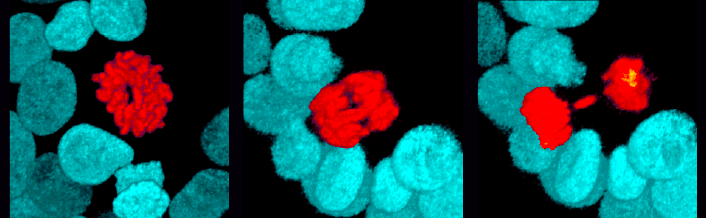
Cancer is a highly heterogeneous disease, with individual cells exhibiting diverse morphological, molecular, and functional characteristics. This variability poses a major challenge for developing therapies that effectively target all cancer cells, in both adult and pediatric patients. The Snippert group main interest is to use patient-derived (cancer) organoids, advanced molecular genetics, and state-of-the-art imaging to study how cellular plasticity and genomic instability drive tumor evolution and influence responses to therapy.

We employ colon cancer as our prototype cancer model to study tumor progression, with well-characterized signaling pathways affected by driver mutations. Moreover, a dominant role is attributed to the tumor microenvironment in the acquisition of malignant growth behavior, which includes the induction of cellular plasticity.

The scope of our interest is in the evolution of cellular behavior and phenotypes during the transitory stages from pre-cancer to cancer. Experimentally, these early stages remain largely unexplored territory as there is strong study bias towards late-stage cancers. The Snippert lab uses an integrated approach of descriptive (spatial) single-cell atlases of early cancers, with experimental explorations using functional organoid models.

Genetic heterogeneity

The vast majority of tumors is genetically heterogeneous, meaning that cancers are composed of many different genetic subclones. Newly acquired mutations may affect tumor cell characteristics. In recent years, continuous innovation in sequencing techniques has been the main driver to advance our knowledge about genetic heterogeneity in cancers. We are interested to understand how tumor (epi)genomes evolve from pre-malignant states to cancer.

Cellular plasticity

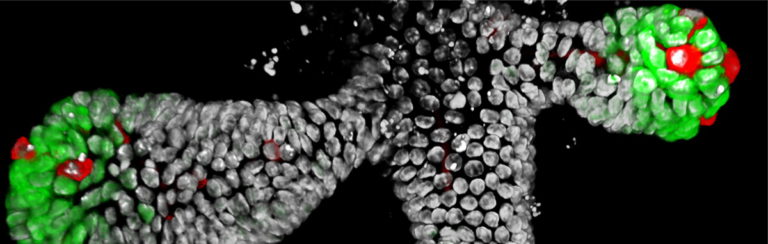
Phenotypic heterogeneity in tumors relates to different cellular states and phenotypes that are present within genetically identical subclones. Moreover, these phenotypic states are highly dynamic and interchangeable, enabling cells to change properties during changing conditions. These shapeshifting properties of cells is referred to as cellular plasticity, and is highly associated with metastasis and drug resistance. We have generated sophisticated organoid models to study the (epi)genome underlying plasticity at high spatio-temporal resolution.

(Single-cell) drug response

Regularly, anti-cancer therapies are effective against the majority of tumor cells. Unfortunately, there is frequently a small population of cells that shows resistance against the applied therapy. Little is known about the nature and origin of these resistant ‘persister’ cells. We develop technologies to study drug response in real-time at the single-cell level.

NEWS

Joris

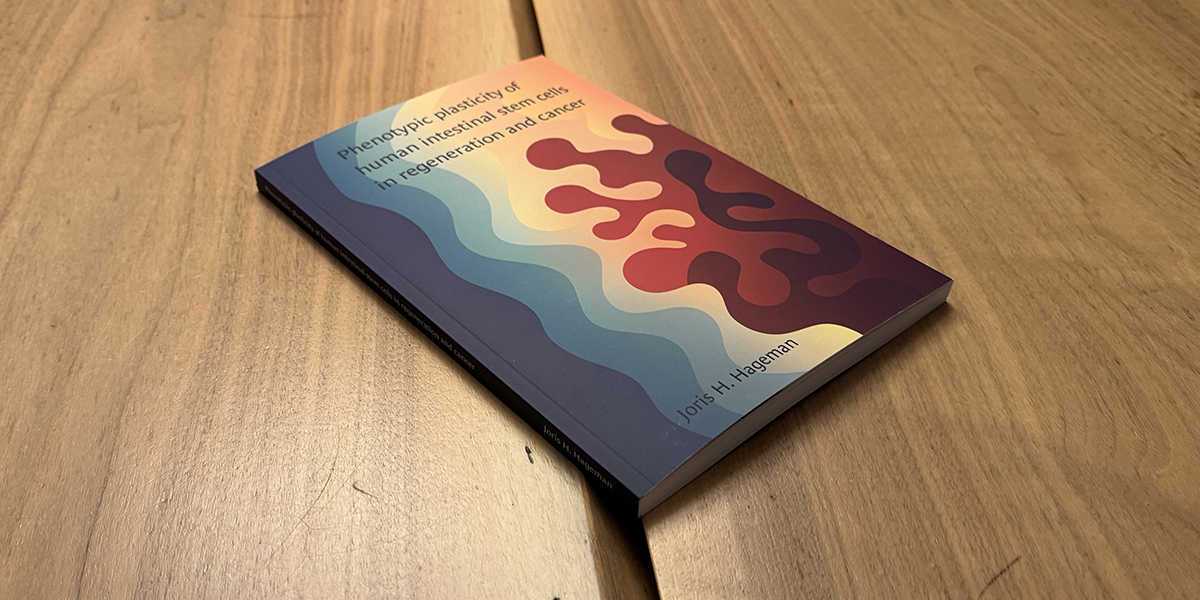
Joris earned his PhD!!!

Joris Hageman successfully defended his thesis ‘Phenotypic plasticity of human intestinal stem cells in regeneration and cancer’. He made such a great show of his defense, that he was awarded cum laude. Wow!!! Joris was our best in shaping beautiful looking Bonsai-organoids. We wish him all the best in his further career and life.
tuft

Elucidating tuft cell biology

Intestinal tuft cells are epithelial sentinels that trigger host defense upon detection of parasite-derived compounds. Their functioning and differentiation are poorly understood because the cell type is rare. In Nature Communications we describe our developed reporters and optimized differentiation strategies in organoids, to generate a platform for studying immune-related tuft cell subtypes and their unique chemosensory properties.

Snippert lab at Ad6

Snippert lab participates with Alpe d’HuZes

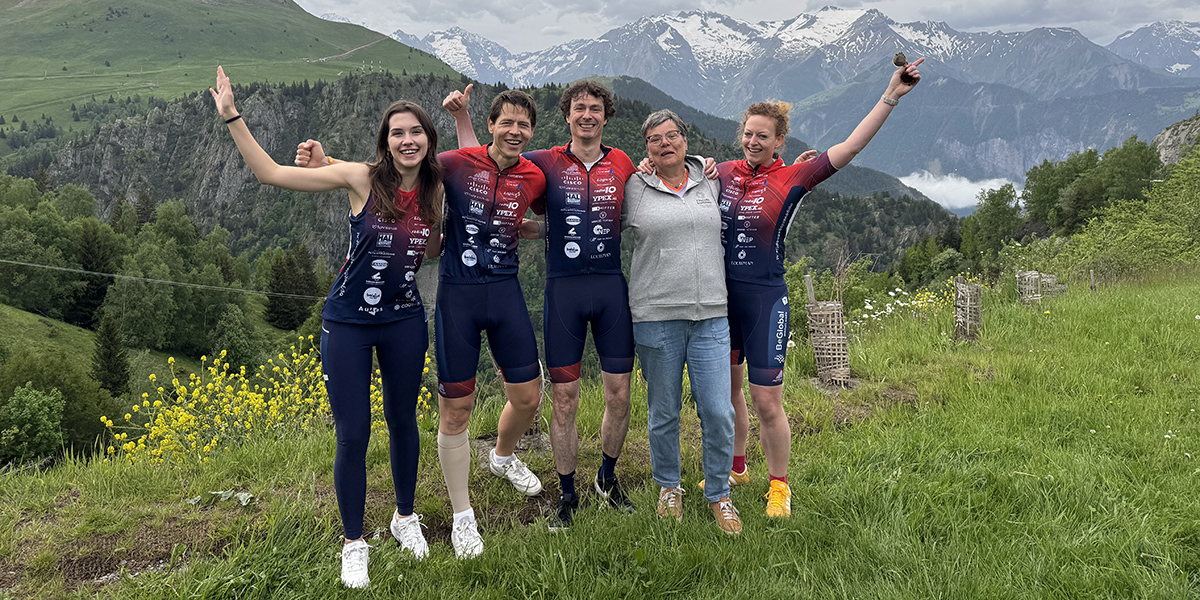
We cycled and ran the famous Tour de France col Alpe d’Huez to raise money for cancer research. We joined forces with many of our Oncode Institute colleagues to participate with fundraiser Alpe d’HuZes. What an experience

Logo_NL2

Relocating the lab to new host institute

The complete Snippert lab moved to the Prinses Máxima Center in Utrecht. We will join forces with the strong organoid community in the Máxima, and explore new opportunities to widen our scope and foster our interest in preventing cancer.

hyperdrive

Mutation speed in hyperdrive

Genetic mutations supposed to be permanent, and in stark contrast to the dynamic and reversible nature of cellular plasticity states. With a beautiful collaboration with Marnix Jansen lab in London, we report in Nature Genetics on something in middle, i.e. reversible DNA mutations!!! That is, we found various DNA repair enzymes that continuously flip in -and out-of-frame in MLH1-deficient cancers, thereby modulating mutation speed.

funding logos for news items_KWF

New KWF grant

Hugo received new funding from KWF (€820k), the Dutch Cancer Foundation, to strengthen our team with two new PhD students. We will use this support to make a deep dive into the tumor microenvironment of invasive fronts at the earliest stages of colorectal cancer formation.

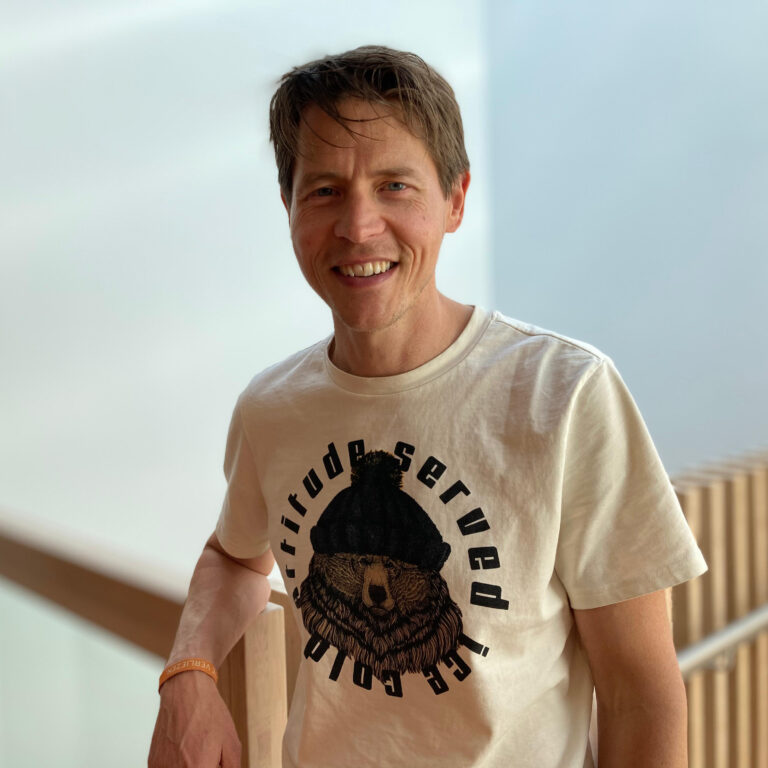
Dr. Hugo Snippert is Group Leader in the Prinses Maxima Center for pediatric oncology. 
Hugo received his PhD (cum laude) in the lab of Hans Clevers (Hubrecht Institute) where he used advanced mouse genetics and microscopy to characterize (new) stem cell populations in the mouse intestine, skin and intestinal cancer. After he started his lab in the academic hospital in Utrecht, he relocated to the Maxima in the summer of 2025 to continue his focus on organoid technology within the larger context of cancer prevention. In 2017 he became an Oncode Investigator.

His main interests relate to cell fate specifications and how multiple individual cells act in concert to secure tissue functioning. He is always looking for concepts and principles, with a strong emphasis on developing new technology.

He is recipient of prestigious grants like HFSP young investigators grant (2018), ERC starting grant (2018), ERC consolidator (2023) and NWO VIDI (2021).

OUR FUNDING